Related products
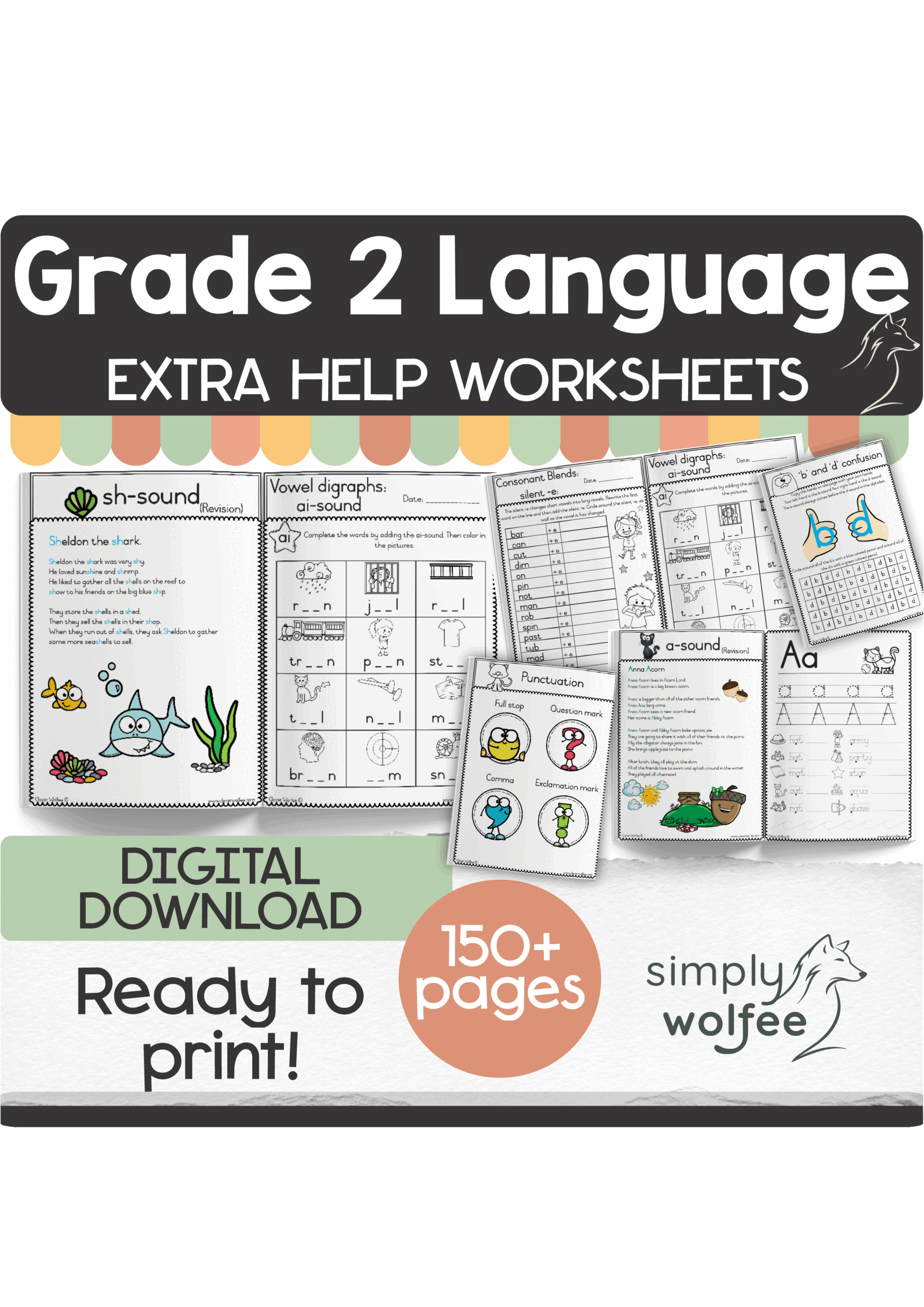
Grade 2 Extra Help: Language
$8
Notice: All resources are only available in digital format and downloadable after purchase.
What Our Customers Say
When reading, spelling or writing starts becoming more challenging, children don’t always need to be pushed ahead. Sometimes they need the chance to go back, strengthen the foundations and practice until the pieces begin to fit together.
Grade 2 is an important stage in language development. Children are moving beyond simply recognizing letters and basic words and are beginning to work more confidently with sounds, spelling patterns, sentences, reading and comprehension.
Grade 2 Extra Help: Language is a substantial 163-page printable PDF workbook for children aged 7 years and older, designed to provide additional language and literacy practice through a wide variety of structured, child-friendly activities.
From alphabet and vowel revision to sound recognition, handwriting, phonics, digraphs and reading comprehension, this workbook gives parents and teachers a large collection of printable activities to use when a learner needs that little bit of extra practice.
What’s Inside?
The workbook begins by revisiting an essential foundation: the alphabet and vowels.
Children review the lowercase alphabet from a to z and identify the five vowels a, e, i, o and u. This provides a useful starting point before moving into more detailed sound and word work.
The workbook then focuses on individual vowels. Children practice uppercase and lowercase letter formation and work with illustrated vocabulary containing the featured sound.
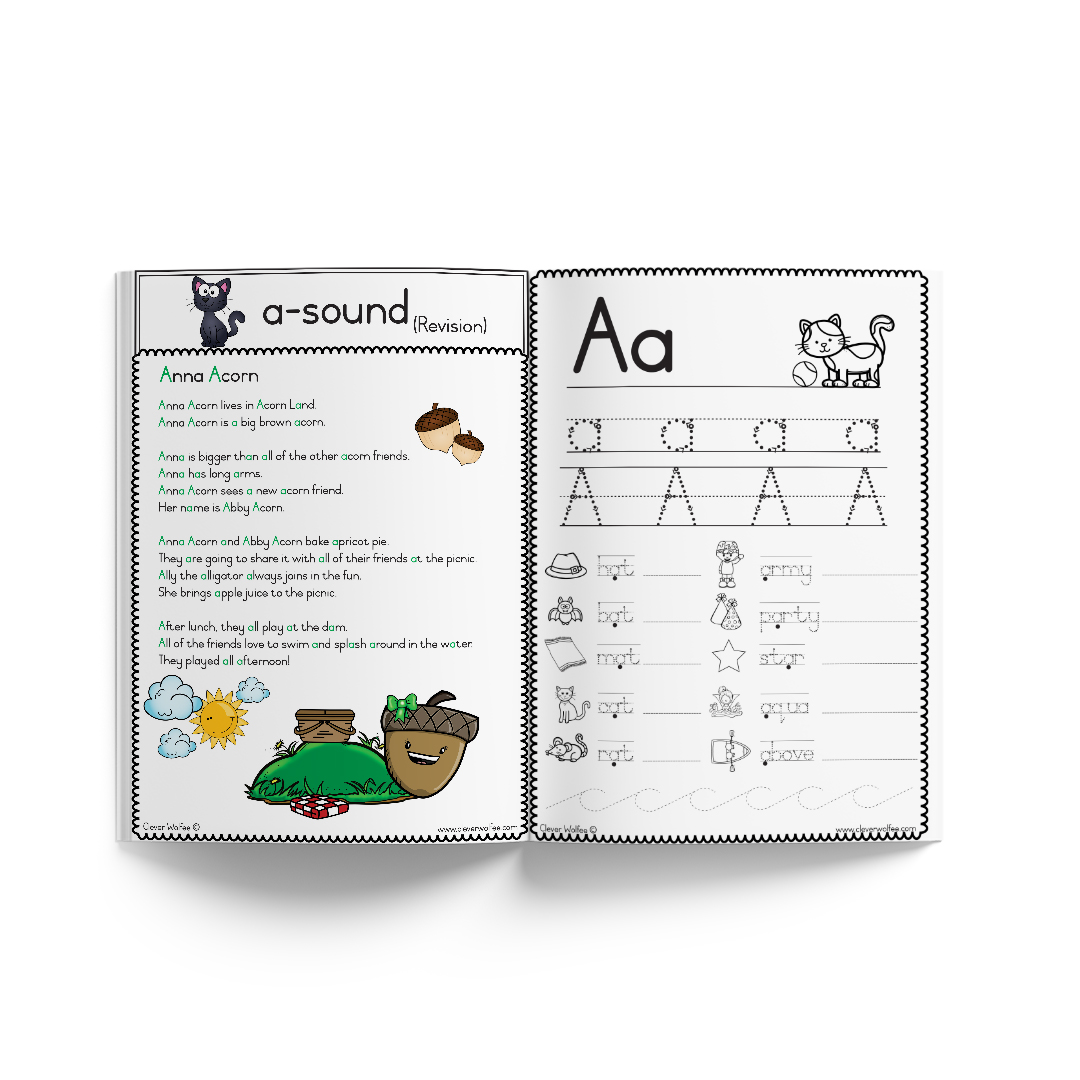
For example, the a page includes words such as hat, bat, mat, cat, rat, army, party, star, aqua and above. Similar activities are provided for e, i, o and u, combining letter practice with word recognition and writing.
This means children aren't simply copying a letter repeatedly. They begin looking at how that sound appears in different words and positions.
Sound Revision Through Stories
One of the particularly useful features of this workbook is that sound revision is also placed into the context of short reading passages.
For the a-sound, children meet Anna Acorn, who lives in Acorn Land and spends time with Abby Acorn and Ally the alligator. The story deliberately contains many words featuring the target sound, giving learners the opportunity to encounter it naturally within connected text rather than only in isolated word lists.
The e-sound section uses the story of Emma and the Elephants, while the i-sound section introduces Pip the giraffe.
This approach helps bridge the gap between learning a sound and recognizing it while reading.
Recognize It, Hear It and Write It
After reading the sound-focused passages, children complete a variety of follow-up activities.
They may be asked to find and circle words containing a particular sound, identify the middle sound represented by a picture, write the names of pictured objects, or copy letters, words and sentences.
For example, the a-sound activities ask learners to distinguish words such as can, cat, mat, pat and man from words containing other middle sounds. Another activity shows familiar pictures such as a car, cat, tap, ball, bat and pan and asks children to identify the middle sound before writing the complete words.
This provides repeated practice in several forms: children see the sound, hear it, identify it and write it.
Handwriting and Sentence Practice
Writing practice is integrated throughout the resource.
Children copy individual letters before progressing to words and simple sentences. For example, the a-sound handwriting page moves from practicing a, to words such as an and all, and finally to copying the sentence “Half an apple.”
This gradual progression is useful because handwriting isn't treated as a completely separate skill. Children practice letter formation while simultaneously reinforcing vocabulary, spelling and sentence structure.
Phonics and Digraphs
As the workbook progresses, children encounter more advanced sound combinations.
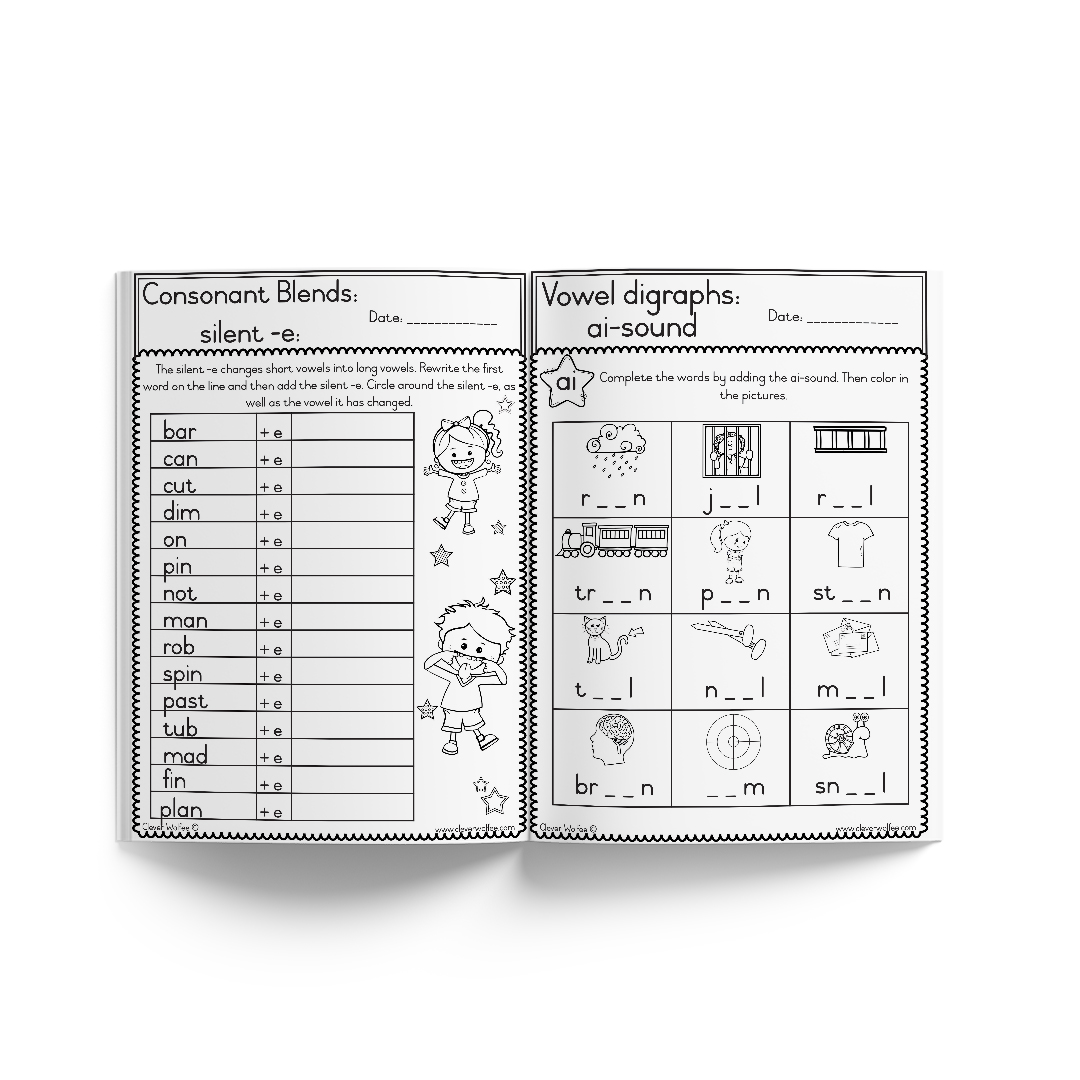
The resource includes practice with common digraphs such as ch, sh, th and wh. Activities ask children to choose the correct words for pictures, with examples including fish, moth, branch, three, wheat and shell.
These activities help children notice that two letters can work together to represent a sound—a useful step as reading and spelling become more complex.
Working With Common Letter Confusion
Some letters can be surprisingly tricky for young learners, particularly when they look similar.
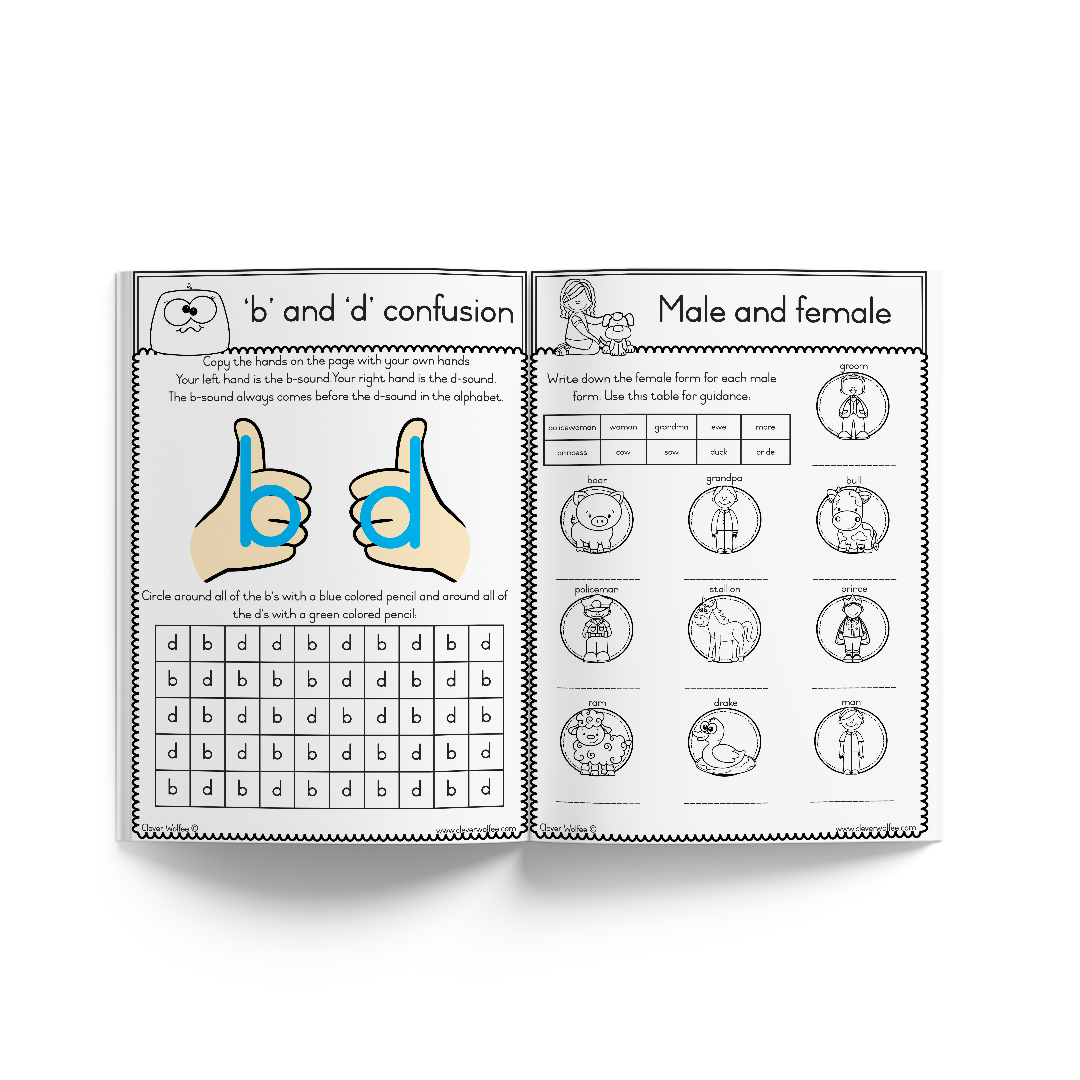
The workbook includes dedicated practice for b and d confusion. One activity asks children to draw pictures for b- and d-words such as ball, doll, book, dog, baby, door, bottle, donkey and bird.
This provides targeted practice for children who may need additional reinforcement when distinguishing these letters in reading and writing.
Reading Comprehension
The workbook doesn't stop at individual sounds and words. It also gives learners opportunities to read longer passages and answer questions about what they have read.
One comprehension passage, Jane’s Special Sunrise, tells the story of Jane waking to a beautiful sunrise on her seventh birthday. After reading the passage, children answer questions about details from the story, such as the season, the colours of the sunrise, why the day is special and Jane's age.
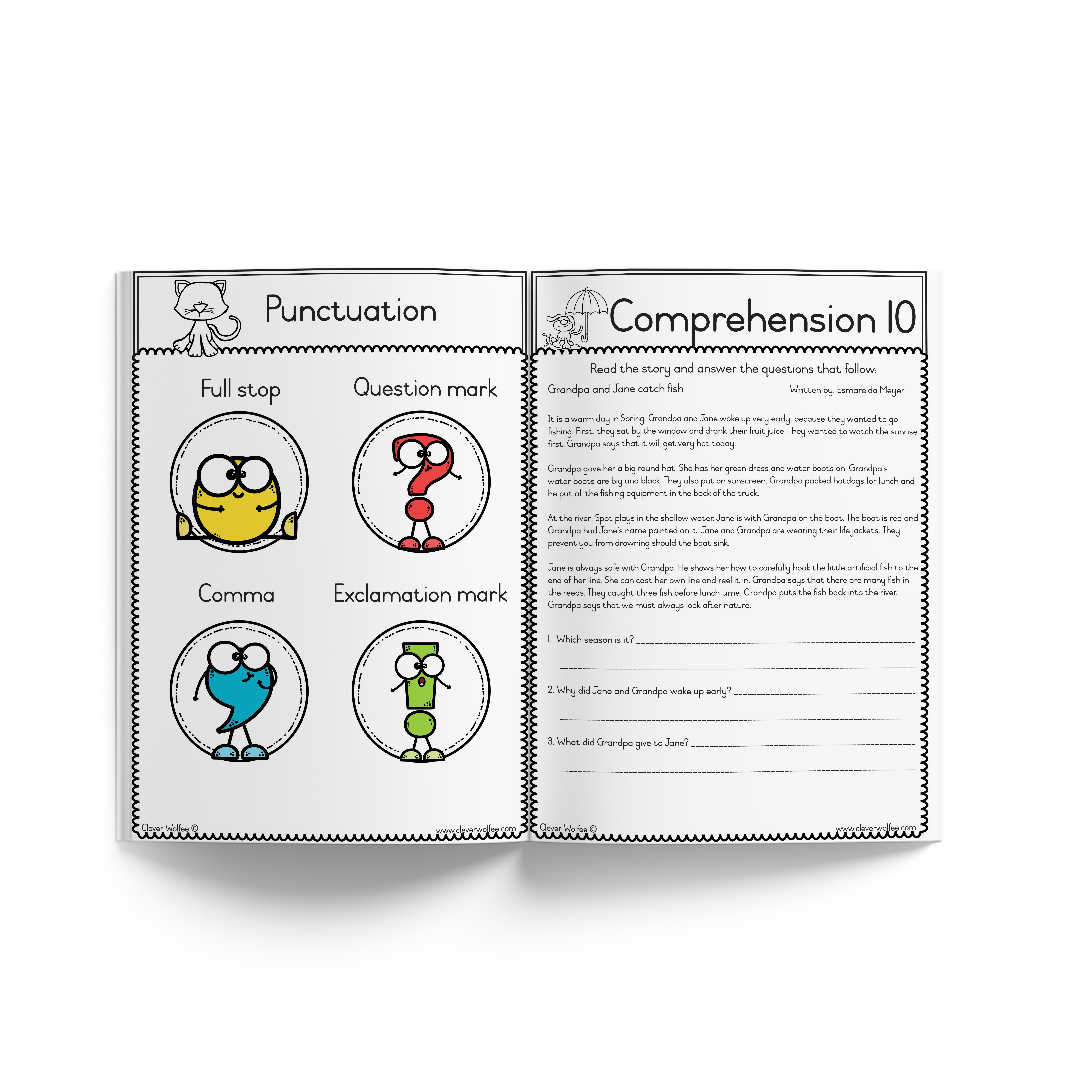
Other comprehension activities ask children to recall details, identify characters, explain reasons and answer questions based directly on information in the text. For example, one later comprehension asks children questions about Spot, including his appearance, his role on Grandpa's farm, his favorite season and why he dislikes winter.
These activities encourage children to do more than simply pronounce the words on a page. They need to read for meaning, remember information and communicate their answers in writing.
Why Teachers and Parents Will Love It
One of the frustrating things about helping a child with language is that “they're struggling with reading” doesn't always tell you where the difficulty lies.
Is it recognizing vowel sounds?
Hearing the middle sound in a word?
Remembering spelling patterns?
Confusing similar letters?
Writing the word independently?
Or reading a paragraph but struggling to remember what it actually said?
Grade 2 Extra Help: Language gives teachers and parents a substantial bank of activities covering different areas of early literacy, making it easier to select practice according to what the individual learner needs.
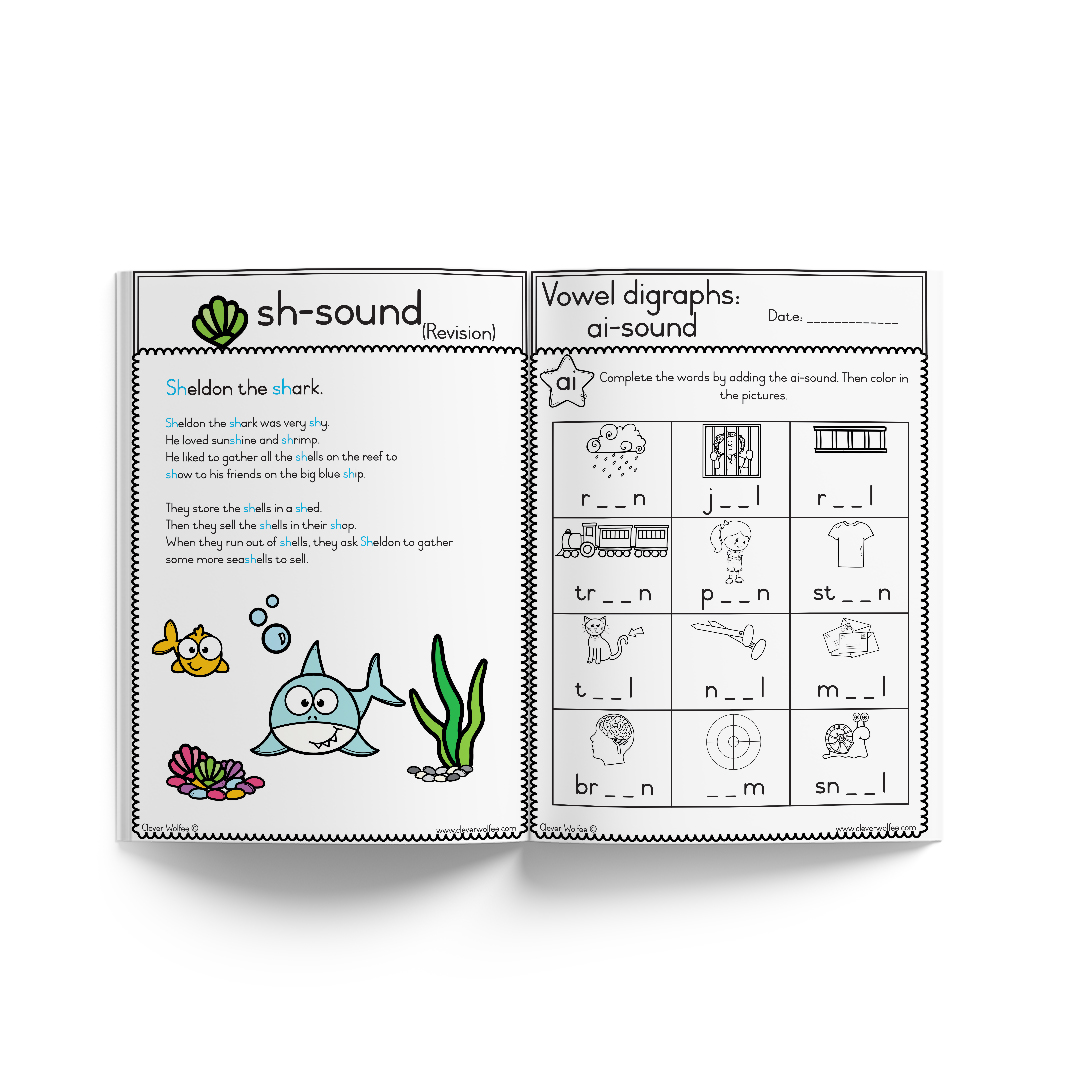
And with 163 pages, you don't have to use the workbook from beginning to end.
A teacher can select worksheets to reinforce a particular sound or literacy concept. A homeschool parent can incorporate sections into weekly language lessons. A parent can print a few pages for additional practice when their child needs reinforcement.
The resource can therefore grow with the learner rather than being a booklet that is completed once and forgotten.
Advantages of This Resource
- A substantial 163-page printable language workbook
- Designed for children aged 7+ years
- Provides additional language and literacy practice
- Includes alphabet and vowel revision
- Reinforces uppercase and lowercase letter formation
- Provides targeted practice with vowel sounds
- Uses illustrated vocabulary to support word recognition
- Helps children identify sounds within words
- Includes middle-sound activities
- Encourages children to say words aloud and listen carefully to their sounds
- Combines sound recognition with spelling and writing
- Includes sound-focused reading passages
- Helps children encounter target sounds within meaningful text
- Provides handwriting and copying practice
- Progresses from individual letters to words and sentences
- Includes phonics and digraph practice
- Covers common digraphs including ch, sh, th and wh
- Includes targeted activities for b and d confusion
- Develops vocabulary through pictures and written words
- Includes reading-comprehension passages
- Encourages children to retrieve information from a text
- Develops written-answer skills through comprehension questions
- Provides varied activities instead of relying on one worksheet format
- Allows parents and teachers to choose pages according to a child's specific learning needs
- Individual worksheets can be reprinted when additional repetition is needed
- Suitable for classroom support, homeschooling, revision and extra practice at home
Age: 7+ years
Pages: 163
Level: Grade 2 / Extra Language Practice
Topics: Alphabet revision, vowels, phonics, sound recognition, spelling, handwriting, digraphs, letter discrimination, reading and comprehension
Skills: Reading, phonics, vocabulary, spelling awareness, sound recognition, handwriting, sentence writing and reading comprehension
Format: Digital PDF
This is a digital, printable product. No physical workbook will be shipped. After purchase, simply download the PDF and print the worksheets you would like to use. Pencils, crayons and other physical learning materials are not included.
Language confidence is built in layers. First children recognize the letters. Then they hear the sounds. They build the words, read the sentences and, eventually, understand the whole story.
With Grade 2 Extra Help: Language, teachers and parents have 163 pages of ready-to-print practice to revisit those important foundations, target areas that need extra attention and give children more opportunities to practice the skills that help reading and writing become stronger.