Reading and writing confidence isn’t built from one worksheet or one lesson. It grows when children get enough opportunities to practice the little skills that eventually come together to make language click.
Recognizing letters, hearing sounds, reading words, writing sentences and understanding basic language concepts are all important building blocks in the early school years. When one of those building blocks is shaky, a child may simply need more practice before moving forward.
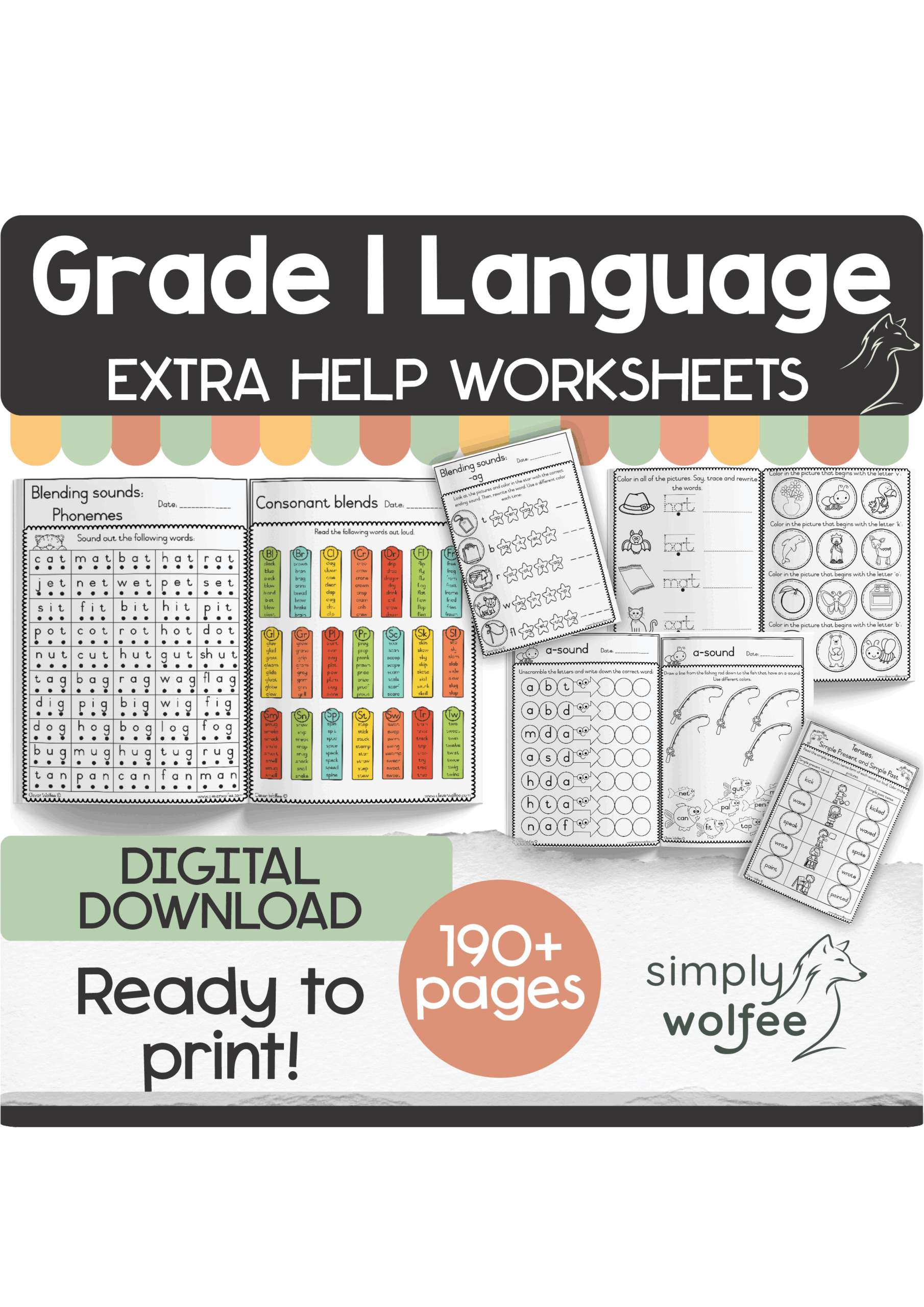
Grade 1 Extra Help: Language is a comprehensive 196-page printable PDF workbook for children aged 6 years and older, packed with language and literacy activities that move from foundational pre-writing and alphabet work into phonics, vocabulary, handwriting, sentence work and basic grammar concepts.
With such a large variety of activities, teachers and parents can use the workbook for additional practice, revision or targeted support according to the individual learner’s needs.
What’s Inside?
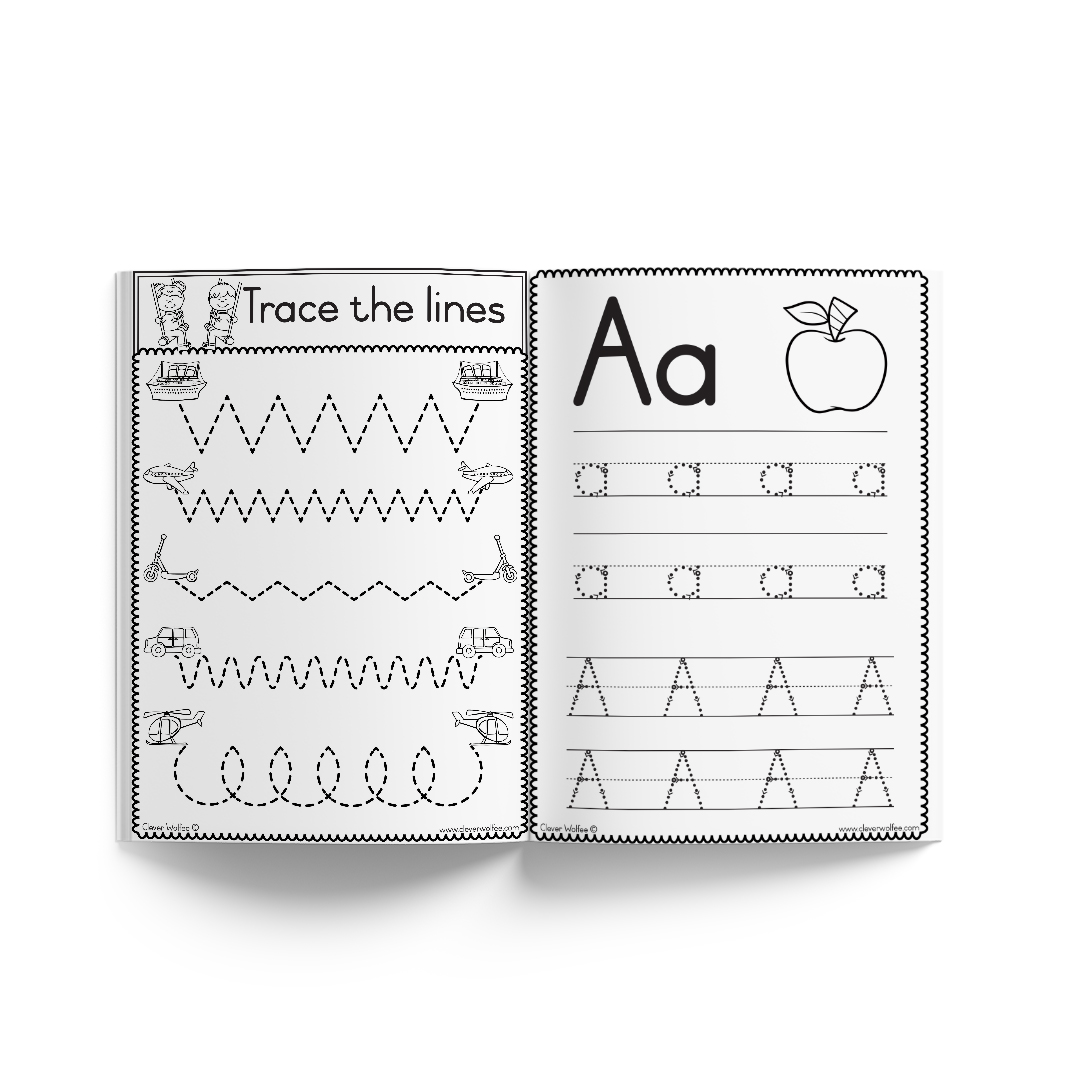
The workbook begins right at the foundations of writing.
Children first practice tracing different types of lines, including straight, curved, wavy, zigzag and looping paths. These activities encourage the controlled pencil movements children need when forming letters and writing words.
From there, learners are introduced to the alphabet, with all lowercase letters displayed together and the vowels a, e, i, o and u highlighted separately.
The workbook then provides extensive practice with individual letters.
Children work with uppercase and lowercase letters, seeing each letter alongside a corresponding picture and repeatedly practicing its formation. For example, A/a is paired with an apple, B/b with a bear and D/d with a dolphin.
But the letter practice doesn’t stop with handwriting.
From Letters to Words
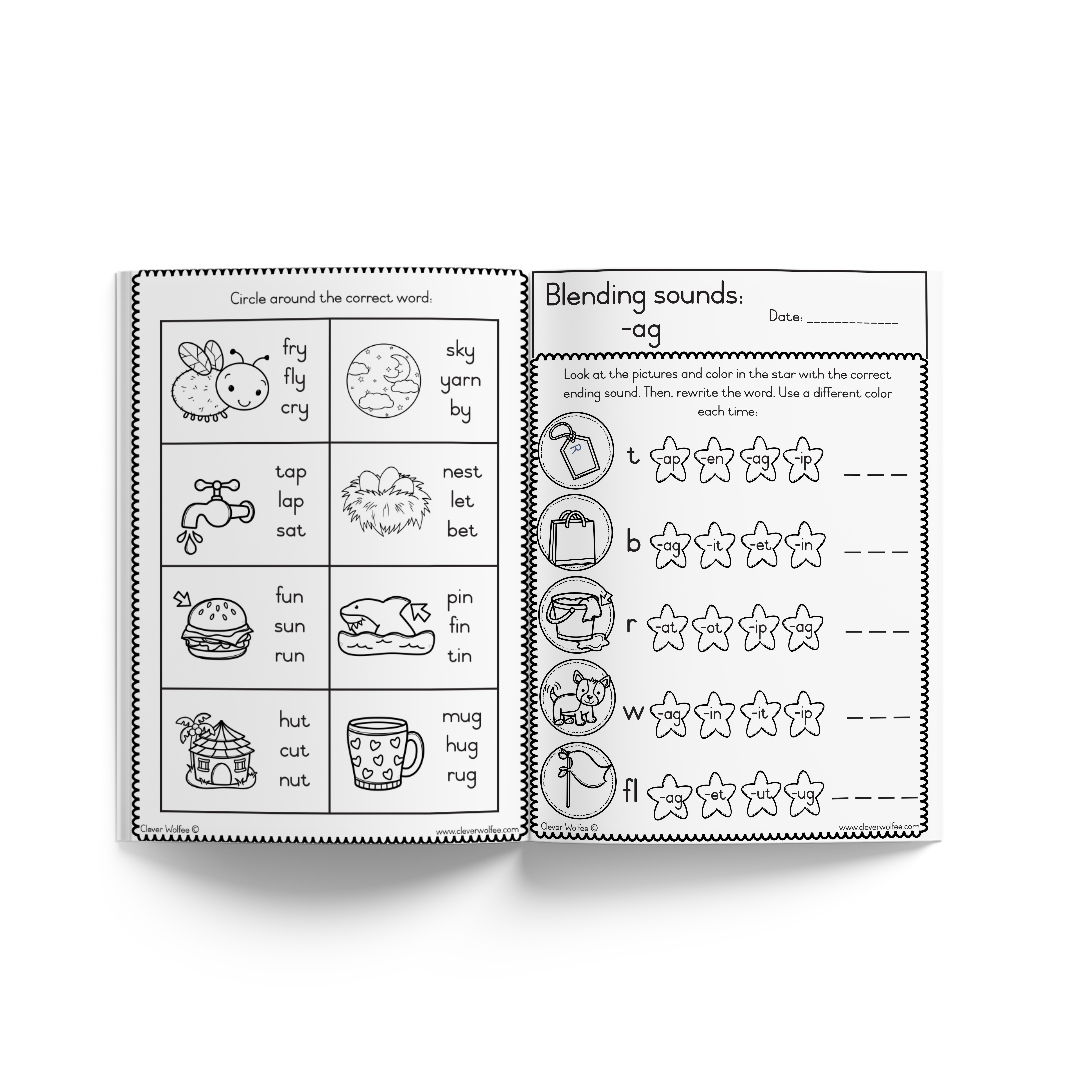
After practicing a letter, children move into words containing that sound or letter.
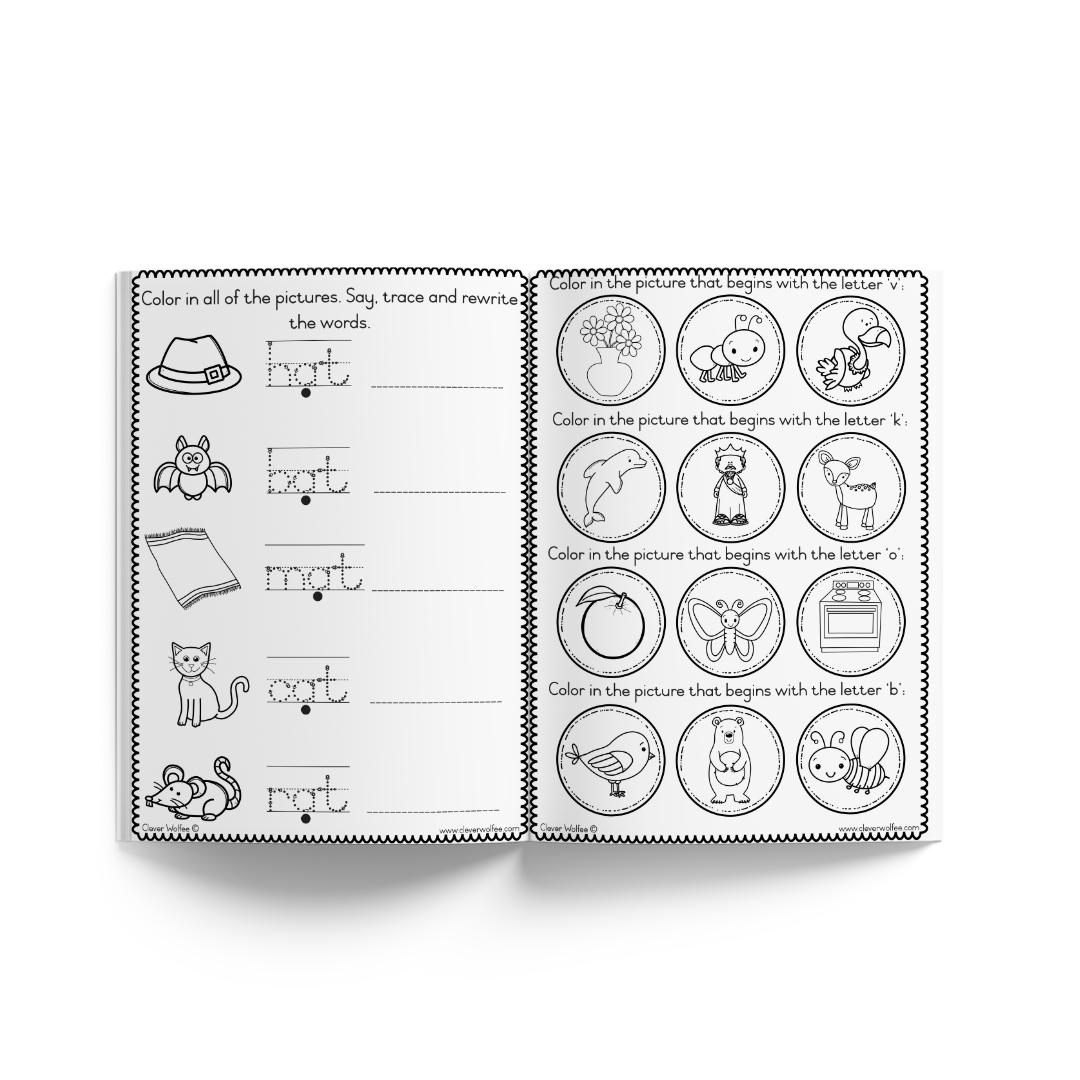
These pages combine pictures, reading, tracing, rewriting and colouring.
For example, the A section includes words such as hat, bat, mat, cat and rat. The B section includes ball, bat, bun, bus and bag, while the D section includes dad, dog, dot, dig and dip. Children are instructed to colour the pictures, say the words, trace them and then rewrite them independently.
This repeated see it, say it, trace it and write it approach gives learners several opportunities to interact with the same vocabulary.
Rather than practicing a letter in isolation and immediately moving on, children begin seeing how letters and sounds appear inside real words.
Phonics Practice
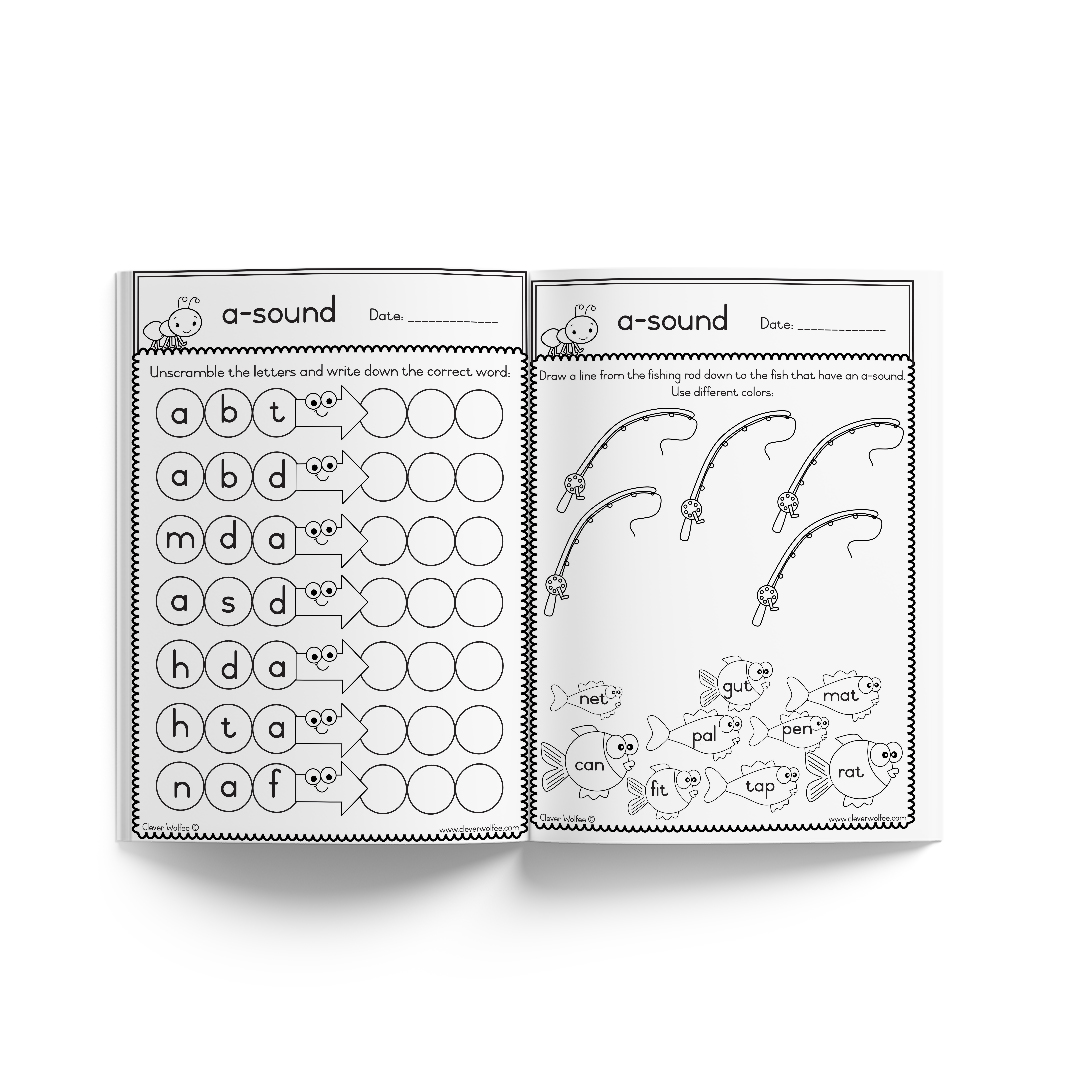
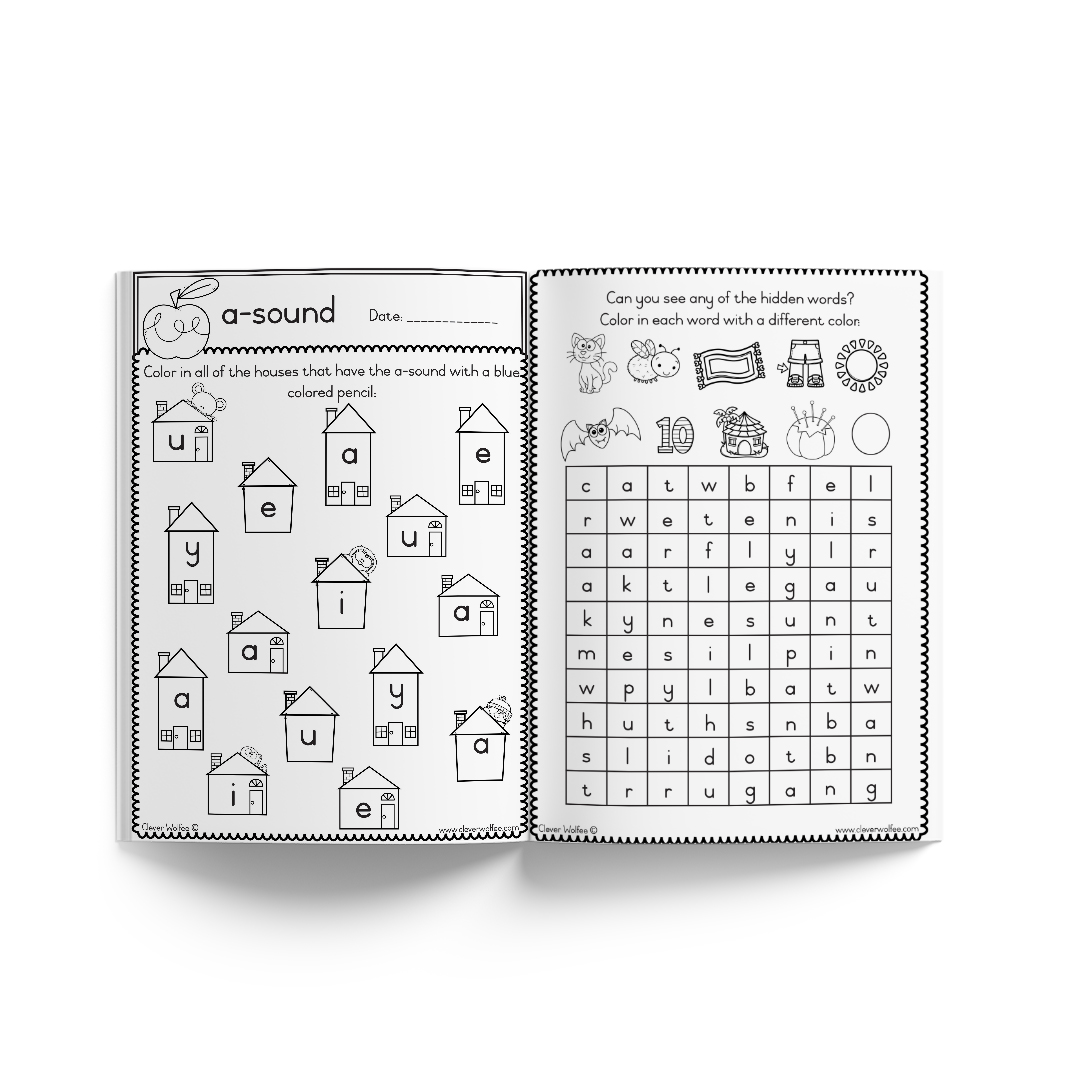
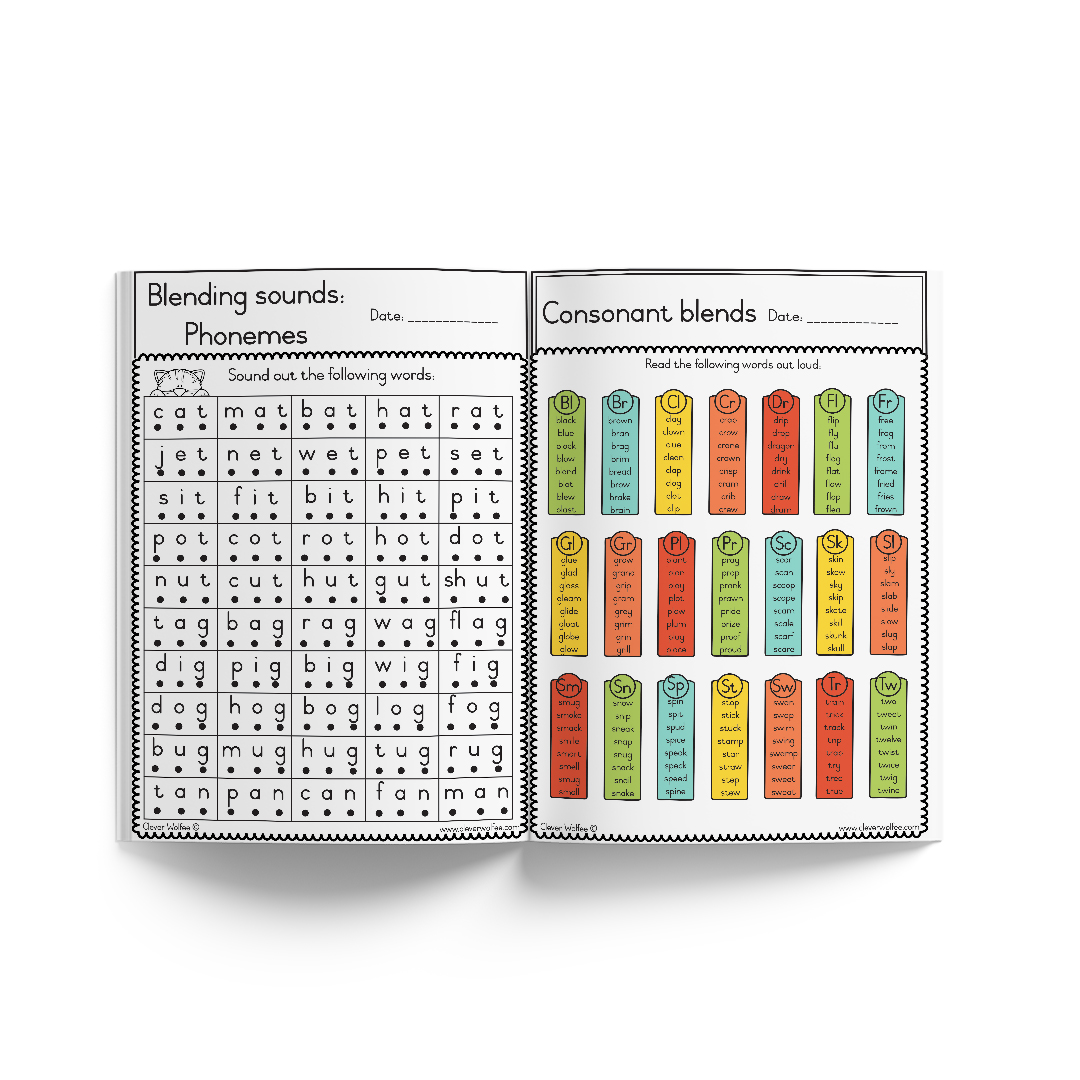
The workbook contains dedicated phonics practice, giving children opportunities to work with individual vowel sounds as well as common sound combinations.
The phonics activities include vowels a, e, i, o, u and y, together with combinations such as sh, ch, th, wh, ay, oo, ow, ou, ee and ey.
This helps children move beyond simply knowing the alphabet towards recognizing sound patterns that appear in words.
Reading and Writing Practice
One of the major advantages of this resource is that children progress from individual letters and words to complete sentences.
The workbook includes sentence-writing activities based on different sounds. Children first read the sentence aloud and then rewrite it on the lines provided.
Examples include sentences such as That is a cat, I have a hat, That is a pen, I have a bed, Go sit there, It fits, That is a pot, Look up and I have a puppy.
There are also sound-specific sentence rewriting activities later in the workbook. For example, the y-sound practice includes sentences involving words such as yolk, yellow, yogurt, yarn and yes.
This gives children valuable practice moving from recognizing a word on its own to seeing and using words as part of a complete sentence.
Grammar and Language Concepts
As children become more comfortable with words and sentences, the workbook introduces several basic language concepts.
Learners practice plurals, including adding -s and -es to words. Activities include changing singular words into their plural forms and finding plural words hidden in a word grid.
Children are also introduced to nouns through picture-and-word matching activities. They connect familiar objects and people with words such as shoes, house, boy, book, teddy, banana, pencil, flower, family, sweets, sock and clouds.
The workbook introduces pronouns including he, she, it and we. Children identify the appropriate pronoun for pictures and sentences and rewrite their answers.
Prepositions and Position Words
Understanding positional language is another important part of early language development.
Children practice prepositions such as:
- on
- under
- over
- between
- in
- behind
- in front of
- above
- around
- next to
The activities use pictures, matching and rewriting to help learners connect these words with their meanings.
This is particularly useful because children aren't being asked to memorize a definition of a preposition. They can look at a visual example, say the word and then write it.
Present and Past Tense
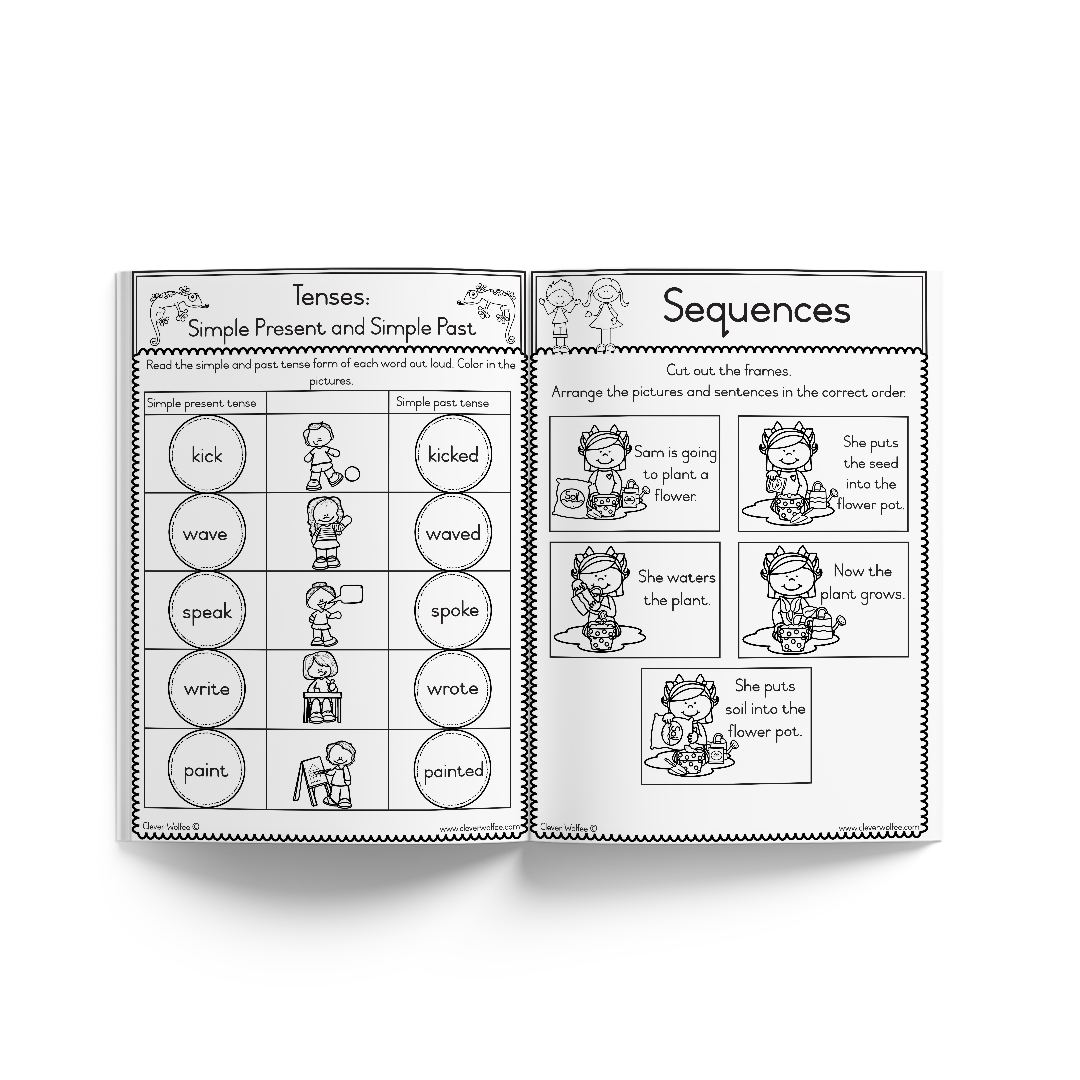
The workbook also introduces children to simple present and simple past tense through familiar action words.
Examples include:
run – ran
play – played
eat – ate
clap – clapped
swim – swam
kick – kicked
wave – waved
speak – spoke
write – wrote
paint – painted
These activities expose children to both regular and irregular changes in familiar verbs while keeping the examples concrete and age-appropriate.
Sequencing Activities
Language is also about understanding what happens first, next and last.
The workbook includes hands-on sequencing activities where children cut out picture-and-sentence frames and arrange them in the correct order.
Examples include the steps involved in planting a flower, getting ready for school, making pancakes and writing and mailing a letter.
These activities encourage children to think about logical order while connecting pictures with written sentences.
Why Teachers and Parents Will Love It
Sometimes a child who appears to be struggling with “language” isn’t struggling with everything.
Perhaps letter formation needs more attention.
Perhaps they can recognize sounds but need more practice putting those sounds into words.
Maybe they can read individual words but need confidence with sentences.
Or perhaps concepts such as plurals, pronouns, prepositions or tenses need another round of practice.
That’s why a 196-page resource can be so useful.
Instead of searching for a different worksheet every time a learning gap appears, teachers and parents have a large collection of activities available in one printable workbook.
You don’t have to complete all 196 pages from beginning to end.
Choose the worksheets that match the skill the child is currently practicing. Reprint an activity when more repetition is needed. Use sections for revision or combine selected pages to create a personalized extra-help pack.
The workbook also uses a mixture of tracing, writing, reading, colouring, matching, searching, choosing and cutting-and-arranging activities, helping to provide variety rather than asking children to complete the same style of exercise over and over again.
Advantages of This Resource
- A substantial 196-page language and literacy resource
- Designed for children aged 6+ years
- Provides additional Grade 1 language practice
- Begins with pre-writing and line-tracing activities
- Covers lowercase and uppercase alphabet recognition
- Provides repeated letter-formation practice
- Connects letters with familiar pictures and vocabulary
- Encourages children to say, trace and rewrite words
- Includes extensive picture-supported word practice
- Provides dedicated phonics activities
- Covers individual vowel sounds and several common sound combinations
- Progresses from letters and words to complete sentences
- Includes sentence reading and rewriting practice
- Introduces singular and plural words
- Practices plural endings including -s and -es
- Introduces nouns using picture-and-word activities
- Introduces pronouns including he, she, it and we
- Develops understanding of common prepositions and positional vocabulary
- Introduces simple present and simple past tense
- Includes both regular and irregular verb examples
- Includes sequencing activities combining pictures and sentences
- Encourages reading, handwriting and vocabulary development
- Uses colouring and visual activities to add variety
- Includes cut-and-arrange activities for hands-on learning
- Allows teachers and parents to target particular areas where a child needs additional practice
- Individual worksheets can be printed again when repetition is needed
- Suitable for classroom support, homeschooling, revision and additional practice at home
Age: 6+ years
Pages: 196
Level: Grade 1 / Extra Language Practice
Topics: Alphabet, handwriting, vocabulary, phonics, reading, sentence writing, plurals, nouns, pronouns, prepositions, tenses and sequencing
Skills: Pre-writing, letter formation, phonics, word recognition, reading, spelling awareness, handwriting, vocabulary, sentence writing and basic language concepts
Format: Digital PDF
This is a digital, printable product. No physical workbook will be shipped. After purchase, simply download the PDF and print the worksheets you would like to use. Pencils, crayons, scissors and other physical learning materials are not included.
Strong language skills aren’t built in one giant leap. They’re built one line, one letter, one sound, one word and one sentence at a time.
With Grade 1 Extra Help: Language, parents and teachers have 196 pages of ready-to-print practice to help reinforce those building blocks, revisit skills that need a little more attention and give young learners plenty of opportunities to practice their way towards greater confidence.